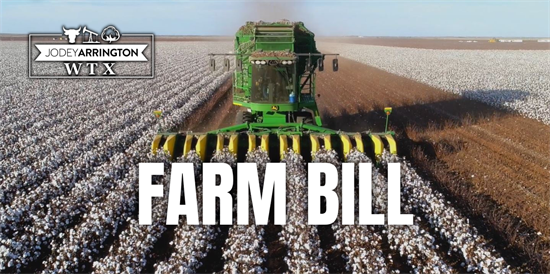
“Last year, I was proud to deliver historic wins for American agriculture through passage of the One Big Beautiful Bill — strengthening the farm safety net with a historic $66 billion investment, boosting reference prices and crop insurance, promoting trade, and securing long-overdue SNAP reforms.
“We’re building on that success with the 2026 Farm Bill.
“This year’s Farm Bill authorizes the remaining agriculture programs not included in H.R. 1 and advances key provisions I’ve fought for — including my USDA CROP Act to give producers a stronger voice in pesticide decisions and a pilot crop insurance program that will incentivize farmers to bring their cotton to harvest. It strengthens trade promotion, supports new farmers, invests in conservation and precision agriculture, and continues holding states accountable for SNAP mismanagement.
“After years of Farm Bill inaction — with Democrats holding our farmers hostage to protect bloated and broken welfare programs — we changed the equation. By securing the core agriculture reforms last year, we removed the political leverage that had long blocked meaningful change and we delivered real results for Rural America.
“West Texas producers deserve certainty. The Farm Bill should be about farmers — and that’s exactly what Republicans are delivering.” – Chairman Arrington.
Background:
USDA Communication Regarding Oversight of Pesticides (CROP) Act of 2025:
This Farm Bill includes Rep. Arrington’s bill requiring the USDA Office of Pest Management Policy (OPMP), which frequently communicates with producers, to have a meaningful voice in the regulation of crop protection products.
Currently, the OPMP provides feedback to the EPA on the safe use of crop protection products, but EPA is not required to respond or consider OPMP’s guidance, giving the EPA disproportionate input in regulation.
The USDA CROP Act will create a more equitable balance of USDA and EPA input, ensuring that regulations reflect both producer and environmental considerations.
U.S. farmers and ranchers are coping with record inflation and broken supply chains — the last thing they need is the severe limitation of traditional farming tools and methods. If these producers lose the ability to use certain crop protection products, farms will be forced to forgo conservation practices, like no-till farming, and revert to full tillage methods to control pests.
It is vital that OPMP, which coordinates frequently with producers, has a role in this process to help EPA use the best science possible in conducting pesticide registrations and rulemakings to ensure users are not subjected to unnecessary, unscientific conditions.
Harvest Cost Endorsement:
The Farm Bill includes a pilot program known as the Harvest Cost Endorsement which would advance a new risk-management proposal developed by cotton farmers with strong support throughout the cotton supply chain.
This program would allow cotton producers to purchase additional coverage on existing policies and receive an indemnity payment if annual production falls significantly below their Actual Production History (APH).
To receive an indemnity payment, producers would be required to bring their crop to harvest, providing ginners, shippers, and warehouses more certainty on available cotton in the marketplace.